Decorative Objects

The best decorative objects have a way of drawing the eye and holding your attention. From sculptural ceramics and art glass to vintage curiosities and distinctive decorative pieces, this collection is filled with objects chosen simply because they are interesting to live with..

Decorative Objects
Sort by:
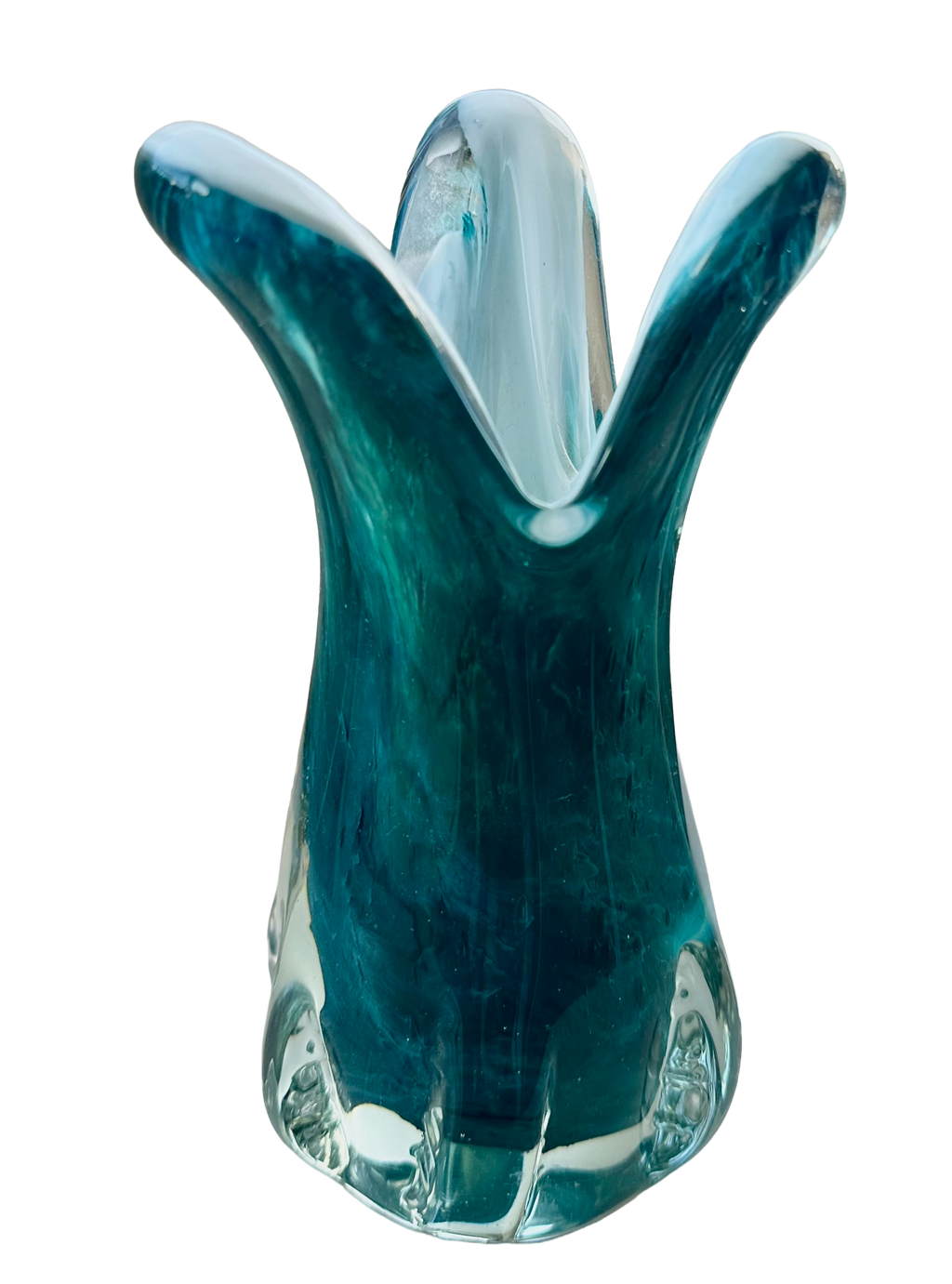
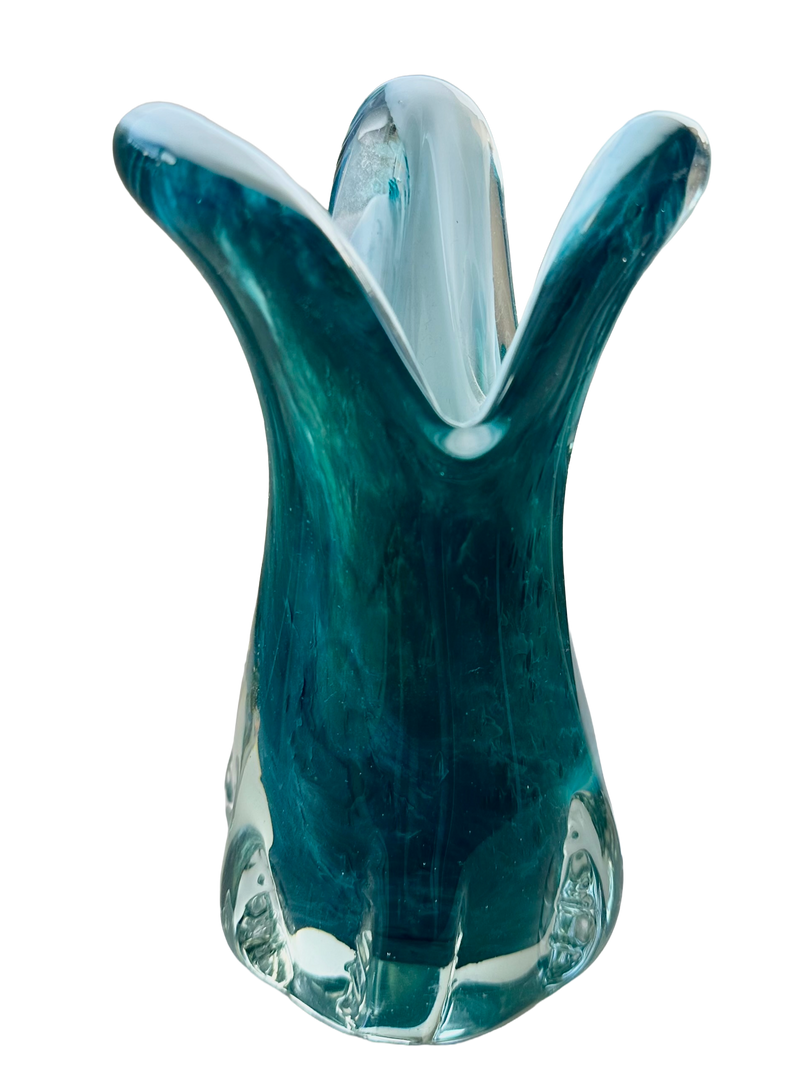
{"id":10944745111711,"title":"Vintage Czech Teal \u0026 White Sommerso Crystal Vase, Attributed to Chřibská, 1960s–70s","handle":"vintage-czech-teal-white-sommerso-crystal-vase-attributed-to-chribska-1960s-70s","description":"\u003cp\u003e\u003cmeta charset=\"UTF-8\"\u003e\u003c\/p\u003e\n\u003cp data-pm-slice=\"1 1 []\"\u003e\u003cspan\u003e\u003cspan\u003e\u003cmeta charset=\"UTF-8\"\u003e\u003c\/span\u003e\u003c\/span\u003e\u003c\/p\u003e\n\u003cp data-pm-slice=\"1 1 []\"\u003e\u003cspan\u003eAt first glance, this vase could easily be mistaken for Murano. Its rich peacock teal, layered \u003c\/span\u003e\u003cem\u003e\u003cspan\u003esommerso\u003c\/span\u003e\u003c\/em\u003e\u003cspan\u003e glass and exuberant sculptural form have all the hallmarks of fashionable Italian design. But its story lies in Bohemia, where glassmakers had been perfecting their craft for centuries.\u003c\/span\u003e\u003c\/p\u003e\n\u003cp\u003e\u003cspan\u003eDespite the political divisions of the Cold War, Czech art glass was finding an audience in the West. \u003c\/span\u003e\u003cspan\u003e\u003c\/span\u003e\u003cspan\u003eDuring the 1960s, at Chřibská, a glassworks founded in 1414, Josef Hospodka was helping to transform that inheritance into something distinctly modern. His designs celebrated the possibilities of molten glass, demanding exceptional skill to turn heavy, layered material into seemingly effortless shapes.\u003c\/span\u003e\u003c\/p\u003e\n\u003cp\u003e\u003cspan\u003eThe vases were exported with paper labels, most of which were lost, so this vase can only be attributed to Chřibská. It is a wonderful expression of that era. Its thick, hand-worked crystal rises into three sweeping lobes, combining the depth o\u003cimg\u003ef \u003c\/span\u003e\u003cem\u003e\u003cspan\u003esommerso\u003c\/span\u003e\u003c\/em\u003e\u003cspan\u003e colour with the freedom of a sculptural form.\u003c\/span\u003e\u003c\/p\u003e\n\u003cp\u003e\u003cstrong\u003e\u003cspan\u003e\u003cmeta charset=\"UTF-8\"\u003e\u003c\/span\u003e\u003c\/strong\u003e\u003c\/p\u003e\n\u003cp data-pm-slice=\"1 1 []\"\u003e\u003cstrong\u003e\u003cspan\u003eMaker:\u003c\/span\u003e\u003c\/strong\u003e\u003cspan\u003e Attributed to Chřibská Glassworks\u003c\/span\u003e\u003cbr\u003e\u003cstrong\u003e\u003cspan\u003eDesigner:\u003c\/span\u003e\u003c\/strong\u003e\u003cspan\u003e In the style of Josef Hospodka\u003c\/span\u003e\u003cbr\u003e\u003cstrong\u003e\u003cspan\u003eDate:\u003c\/span\u003e\u003c\/strong\u003e\u003cspan\u003e c.1960s–1970s\u003c\/span\u003e\u003cbr\u003e\u003cstrong\u003e\u003cspan\u003eOrigin:\u003c\/span\u003e\u003c\/strong\u003e\u003cspan\u003e Bohemia, Czechoslovakia (attributed)\u003c\/span\u003e\u003cbr\u003e\u003cstrong\u003e\u003cspan\u003eMaterial:\u003c\/span\u003e\u003c\/strong\u003e\u003cspan\u003e Hand-worked, layered \u003c\/span\u003e\u003cem\u003e\u003cspan\u003esommerso\u003c\/span\u003e\u003c\/em\u003e\u003cspan\u003e crystal\u003c\/span\u003e\u003cbr\u003e\u003cstrong\u003e\u003cspan\u003eHeight:\u003c\/span\u003e\u003c\/strong\u003e\u003cspan\u003e Approximately 17 cm\u003c\/span\u003e\u003cbr\u003e\u003cstrong\u003e\u003cspan\u003eMarkings:\u003c\/span\u003e\u003c\/strong\u003e\u003cspan\u003e Unsigned\u003c\/span\u003e\u003c\/p\u003e\n\u003cp\u003e\u003cstrong\u003e\u003cspan\u003eCondition:\u003c\/span\u003e\u003c\/strong\u003e\u003cspan\u003e Very good vintage condition, with light surface wear to the ground and polished base and fleabite along the bottom edge. Please examine all photographs carefully.\u003c\/span\u003e\u003c\/p\u003e\n\u003cp data-pm-slice=\"1 1 []\"\u003e\u003cspan\u003e\u003cmeta charset=\"UTF-8\"\u003e\u003c\/span\u003e\u003c\/p\u003e\n\u003cp data-pm-slice=\"1 1 []\"\u003e\u003cstrong\u003e\u003cspan\u003eCollector's Note\u003c\/span\u003e\u003c\/strong\u003e\u003c\/p\u003e\n\u003cp\u003e\u003cspan\u003eJosef Hospodka (1923–1989) was an influential figure in postwar Czech glass design. He became a leading designer at Chřibská in 1958, later directing the renowned glassmaking school at Kamenický Šenov from 1970. His work helped establish the expressive, richly coloured and sculptural forms for which mid-century Bohemian glass became internationally admired.\u003c\/span\u003e\u003c\/p\u003e\n\u003cp\u003e\u003cspan\u003e\u003cmeta charset=\"UTF-8\"\u003e\u003c\/span\u003e\u003c\/p\u003e\n\u003cp data-pm-slice=\"1 1 []\"\u003e\u003cstrong\u003e\u003cspan\u003eWorldwide Shipping: \u003c\/span\u003e\u003c\/strong\u003eWe are always happy to ship worldwide. Your piece will be packed with great care and sent tracked.\u003c\/p\u003e","published_at":"2026-11-22T16:59:26+00:00","created_at":"2026-11-19T20:54:12+00:00","vendor":"Eclectic Design ","type":"Vase","tags":["1960s Design","1970s Design","Bohemian Glass","Chřibská","Collectible Glass","Czech Crystal","Josef Hospodka Style","Mid-Century Modern","Sculptural Vase","Sommerso Glass","Teal Glass","Vintage Crystal Vase"],"price":4500,"price_min":4500,"price_max":4500,"available":true,"price_varies":false,"compare_at_price":null,"compare_at_price_min":0,"compare_at_price_max":0,"compare_at_price_varies":false,"variants":[{"id":62911371575455,"title":"Default Title","option1":"Default Title","option2":null,"option3":null,"sku":null,"requires_shipping":true,"taxable":true,"featured_image":null,"available":true,"name":"Vintage Czech Teal \u0026 White Sommerso Crystal Vase, Attributed to Chřibská, 1960s–70s","public_title":null,"options":["Default Title"],"price":4500,"weight":2000,"compare_at_price":null,"inventory_quantity":1,"inventory_management":"shopify","inventory_policy":"deny","barcode":null,"requires_selling_plan":false,"selling_plan_allocations":[],"quantity_rule":{"min":1,"max":null,"increment":1}}],"images":["\/\/eclecticdesignlondon.com\/cdn\/shop\/files\/IMG_0235.png?v=1795262557","\/\/eclecticdesignlondon.com\/cdn\/shop\/files\/IMG_0225_762c9e90-6539-44af-af79-b13c63201ba7.png?v=1795262186","\/\/eclecticdesignlondon.com\/cdn\/shop\/files\/IMG_0227.png?v=1795271249","\/\/eclecticdesignlondon.com\/cdn\/shop\/files\/IMG_0230.png?v=1795270987","\/\/eclecticdesignlondon.com\/cdn\/shop\/files\/IMG_0205_c868a186-4b25-46ca-a036-a3cd4527c0ae.png?v=1795270737","\/\/eclecticdesignlondon.com\/cdn\/shop\/files\/IMG_0213.png?v=1795270613"],"featured_image":"\/\/eclecticdesignlondon.com\/cdn\/shop\/files\/IMG_0235.png?v=1795262557","options":["Title"],"media":[{"alt":null,"id":54671022129311,"position":1,"preview_image":{"aspect_ratio":0.742,"height":2565,"width":1902,"src":"\/\/eclecticdesignlondon.com\/cdn\/shop\/files\/IMG_0235.png?v=1795262557"},"aspect_ratio":0.742,"height":2565,"media_type":"image","src":"\/\/eclecticdesignlondon.com\/cdn\/shop\/files\/IMG_0235.png?v=1795262557","width":1902},{"alt":null,"id":54670999617695,"position":2,"preview_image":{"aspect_ratio":0.739,"height":2219,"width":1640,"src":"\/\/eclecticdesignlondon.com\/cdn\/shop\/files\/IMG_0225_762c9e90-6539-44af-af79-b13c63201ba7.png?v=1795262186"},"aspect_ratio":0.739,"height":2219,"media_type":"image","src":"\/\/eclecticdesignlondon.com\/cdn\/shop\/files\/IMG_0225_762c9e90-6539-44af-af79-b13c63201ba7.png?v=1795262186","width":1640},{"alt":null,"id":54671283683487,"position":3,"preview_image":{"aspect_ratio":0.784,"height":2866,"width":2248,"src":"\/\/eclecticdesignlondon.com\/cdn\/shop\/files\/IMG_0227.png?v=1795271249"},"aspect_ratio":0.784,"height":2866,"media_type":"image","src":"\/\/eclecticdesignlondon.com\/cdn\/shop\/files\/IMG_0227.png?v=1795271249","width":2248},{"alt":null,"id":54671277785247,"position":4,"preview_image":{"aspect_ratio":0.994,"height":2707,"width":2690,"src":"\/\/eclecticdesignlondon.com\/cdn\/shop\/files\/IMG_0230.png?v=1795270987"},"aspect_ratio":0.994,"height":2707,"media_type":"image","src":"\/\/eclecticdesignlondon.com\/cdn\/shop\/files\/IMG_0230.png?v=1795270987","width":2690},{"alt":null,"id":54671271592095,"position":5,"preview_image":{"aspect_ratio":0.749,"height":2841,"width":2127,"src":"\/\/eclecticdesignlondon.com\/cdn\/shop\/files\/IMG_0205_c868a186-4b25-46ca-a036-a3cd4527c0ae.png?v=1795270737"},"aspect_ratio":0.749,"height":2841,"media_type":"image","src":"\/\/eclecticdesignlondon.com\/cdn\/shop\/files\/IMG_0205_c868a186-4b25-46ca-a036-a3cd4527c0ae.png?v=1795270737","width":2127},{"alt":null,"id":54671269757087,"position":6,"preview_image":{"aspect_ratio":0.725,"height":3001,"width":2176,"src":"\/\/eclecticdesignlondon.com\/cdn\/shop\/files\/IMG_0213.png?v=1795270613"},"aspect_ratio":0.725,"height":3001,"media_type":"image","src":"\/\/eclecticdesignlondon.com\/cdn\/shop\/files\/IMG_0213.png?v=1795270613","width":2176}],"requires_selling_plan":false,"selling_plan_groups":[],"content":"\u003cp\u003e\u003cmeta charset=\"UTF-8\"\u003e\u003c\/p\u003e\n\u003cp data-pm-slice=\"1 1 []\"\u003e\u003cspan\u003e\u003cspan\u003e\u003cmeta charset=\"UTF-8\"\u003e\u003c\/span\u003e\u003c\/span\u003e\u003c\/p\u003e\n\u003cp data-pm-slice=\"1 1 []\"\u003e\u003cspan\u003eAt first glance, this vase could easily be mistaken for Murano. Its rich peacock teal, layered \u003c\/span\u003e\u003cem\u003e\u003cspan\u003esommerso\u003c\/span\u003e\u003c\/em\u003e\u003cspan\u003e glass and exuberant sculptural form have all the hallmarks of fashionable Italian design. But its story lies in Bohemia, where glassmakers had been perfecting their craft for centuries.\u003c\/span\u003e\u003c\/p\u003e\n\u003cp\u003e\u003cspan\u003eDespite the political divisions of the Cold War, Czech art glass was finding an audience in the West. \u003c\/span\u003e\u003cspan\u003e\u003c\/span\u003e\u003cspan\u003eDuring the 1960s, at Chřibská, a glassworks founded in 1414, Josef Hospodka was helping to transform that inheritance into something distinctly modern. His designs celebrated the possibilities of molten glass, demanding exceptional skill to turn heavy, layered material into seemingly effortless shapes.\u003c\/span\u003e\u003c\/p\u003e\n\u003cp\u003e\u003cspan\u003eThe vases were exported with paper labels, most of which were lost, so this vase can only be attributed to Chřibská. It is a wonderful expression of that era. Its thick, hand-worked crystal rises into three sweeping lobes, combining the depth o\u003cimg\u003ef \u003c\/span\u003e\u003cem\u003e\u003cspan\u003esommerso\u003c\/span\u003e\u003c\/em\u003e\u003cspan\u003e colour with the freedom of a sculptural form.\u003c\/span\u003e\u003c\/p\u003e\n\u003cp\u003e\u003cstrong\u003e\u003cspan\u003e\u003cmeta charset=\"UTF-8\"\u003e\u003c\/span\u003e\u003c\/strong\u003e\u003c\/p\u003e\n\u003cp data-pm-slice=\"1 1 []\"\u003e\u003cstrong\u003e\u003cspan\u003eMaker:\u003c\/span\u003e\u003c\/strong\u003e\u003cspan\u003e Attributed to Chřibská Glassworks\u003c\/span\u003e\u003cbr\u003e\u003cstrong\u003e\u003cspan\u003eDesigner:\u003c\/span\u003e\u003c\/strong\u003e\u003cspan\u003e In the style of Josef Hospodka\u003c\/span\u003e\u003cbr\u003e\u003cstrong\u003e\u003cspan\u003eDate:\u003c\/span\u003e\u003c\/strong\u003e\u003cspan\u003e c.1960s–1970s\u003c\/span\u003e\u003cbr\u003e\u003cstrong\u003e\u003cspan\u003eOrigin:\u003c\/span\u003e\u003c\/strong\u003e\u003cspan\u003e Bohemia, Czechoslovakia (attributed)\u003c\/span\u003e\u003cbr\u003e\u003cstrong\u003e\u003cspan\u003eMaterial:\u003c\/span\u003e\u003c\/strong\u003e\u003cspan\u003e Hand-worked, layered \u003c\/span\u003e\u003cem\u003e\u003cspan\u003esommerso\u003c\/span\u003e\u003c\/em\u003e\u003cspan\u003e crystal\u003c\/span\u003e\u003cbr\u003e\u003cstrong\u003e\u003cspan\u003eHeight:\u003c\/span\u003e\u003c\/strong\u003e\u003cspan\u003e Approximately 17 cm\u003c\/span\u003e\u003cbr\u003e\u003cstrong\u003e\u003cspan\u003eMarkings:\u003c\/span\u003e\u003c\/strong\u003e\u003cspan\u003e Unsigned\u003c\/span\u003e\u003c\/p\u003e\n\u003cp\u003e\u003cstrong\u003e\u003cspan\u003eCondition:\u003c\/span\u003e\u003c\/strong\u003e\u003cspan\u003e Very good vintage condition, with light surface wear to the ground and polished base and fleabite along the bottom edge. Please examine all photographs carefully.\u003c\/span\u003e\u003c\/p\u003e\n\u003cp data-pm-slice=\"1 1 []\"\u003e\u003cspan\u003e\u003cmeta charset=\"UTF-8\"\u003e\u003c\/span\u003e\u003c\/p\u003e\n\u003cp data-pm-slice=\"1 1 []\"\u003e\u003cstrong\u003e\u003cspan\u003eCollector's Note\u003c\/span\u003e\u003c\/strong\u003e\u003c\/p\u003e\n\u003cp\u003e\u003cspan\u003eJosef Hospodka (1923–1989) was an influential figure in postwar Czech glass design. He became a leading designer at Chřibská in 1958, later directing the renowned glassmaking school at Kamenický Šenov from 1970. His work helped establish the expressive, richly coloured and sculptural forms for which mid-century Bohemian glass became internationally admired.\u003c\/span\u003e\u003c\/p\u003e\n\u003cp\u003e\u003cspan\u003e\u003cmeta charset=\"UTF-8\"\u003e\u003c\/span\u003e\u003c\/p\u003e\n\u003cp data-pm-slice=\"1 1 []\"\u003e\u003cstrong\u003e\u003cspan\u003eWorldwide Shipping: \u003c\/span\u003e\u003c\/strong\u003eWe are always happy to ship worldwide. Your piece will be packed with great care and sent tracked.\u003c\/p\u003e"}
Vintage Czech Teal & White Sommerso Crystal Vase, Attributed to Chřibská, 1960s–70s

Vintage Czech Teal & White Sommerso Crystal Vase, Attributed to Chřibská, 1960s–70s

£45.00

At first glance, this vase could easily be mistaken for Murano. Its rich peacock teal, layered sommerso glass and exuberant sculptural form have all the hallmarks of fashionable Italian design. But its story lies in Bohemia, where glassmakers had been perfecting their craft for centuries. Despite the political divisions of the Cold War, Czech ...

More Info
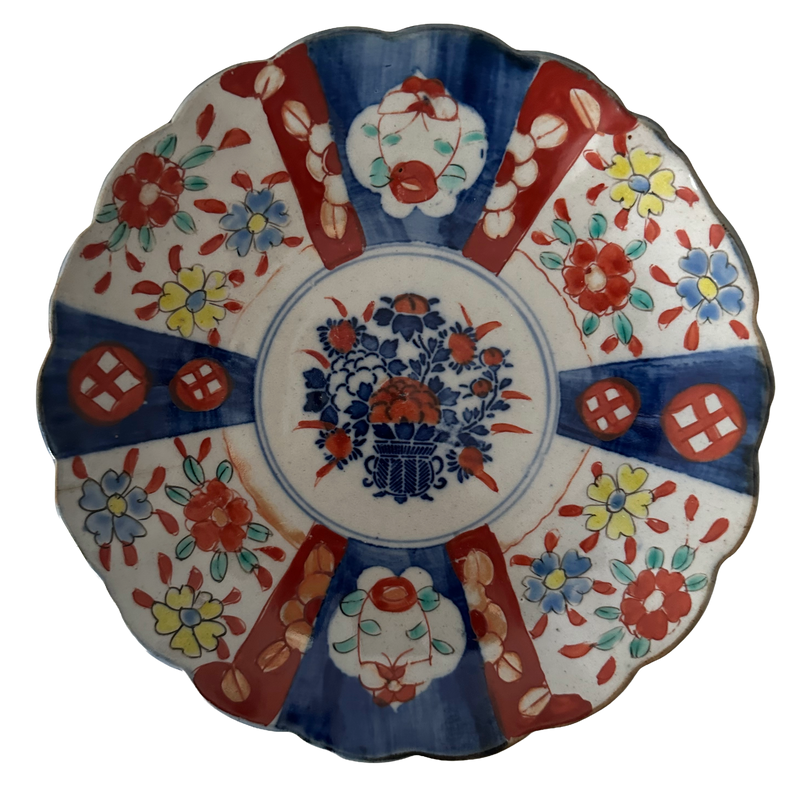
{"id":10945234141343,"title":"Antique Japanese Imari Porcelain Scalloped Plate, Meiji Period, c.1880–1910","handle":"antique-japanese-imari-porcelain-scalloped-plate-meiji-period-c-1880-1910","description":"\u003cp data-pm-slice=\"1 1 []\"\u003e\u003cspan\u003eOne look at this plate helps explain why Japanese Imari porcelain became such a sensation in Europe. Its bold colours, intricate patterns and exuberant decoration were unlike anything European potteries had traditionally produced. The fascination was so great that manufacturers across Europe began creating their own interpretations of the Japanese originals.\u003c\/span\u003e\u003c\/p\u003e\n\u003cp\u003e\u003cspan\u003eThis late nineteenth-century plate has all the confidence of that celebrated tradition. A scalloped rim frames a lively arrangement of radiating panels, alternating rich cobalt blue and iron red with brightly enamelled flowers. At its centre, a basket of blossoms anchors the composition, bringing order to the wonderful profusion of colour and pattern.\u003c\/span\u003e\u003c\/p\u003e\n\u003cp\u003e\u003cspan\u003eThe craftsmanship continues on the reverse, where three hand-painted cobalt-blue floral sprays surround the foot, accompanied by finely drawn concentric rings. These details are easy to overlook, but they reveal the care devoted to parts of the plate that would rarely be seen.\u003c\/span\u003e\u003c\/p\u003e\n\u003cp\u003e\u003cspan\u003eMade during Japan's Meiji period, when Japanese decorative arts were attracting renewed international attention, the plate represents a tradition that had already influenced European taste for generations.\u003c\/span\u003e\u003c\/p\u003e\n\u003cp\u003e\u003cspan\u003e\u003cmeta charset=\"UTF-8\"\u003e\u003c\/span\u003e\u003c\/p\u003e\n\u003cp data-pm-slice=\"1 1 []\"\u003e\u003cspan\u003e.Whether displayed individually or as part of a collection, it has the presence of a much larger decorative piece.\u003c\/span\u003e\u003c\/p\u003e\n\u003cp\u003e\u003cstrong\u003e\u003cspan\u003eOrigin:\u003c\/span\u003e\u003c\/strong\u003e\u003cspan\u003e Japan, Arita\/Imari tradition\u003c\/span\u003e\u003cbr\u003e\u003cstrong\u003e\u003cspan\u003ePeriod:\u003c\/span\u003e\u003c\/strong\u003e\u003cspan\u003e Meiji (1868–1912)\u003c\/span\u003e\u003cbr\u003e\u003cstrong\u003e\u003cspan\u003eDate:\u003c\/span\u003e\u003c\/strong\u003e\u003cspan\u003e c.1880–1910\u003c\/span\u003e\u003cbr\u003e\u003cstrong\u003e\u003cspan\u003eMaterial:\u003c\/span\u003e\u003c\/strong\u003e\u003cspan\u003e Porcelain\u003c\/span\u003e\u003cbr\u003e\u003cstrong\u003eApproximate Size:\u003c\/strong\u003e 20cm diameter\u003cbr\u003e\u003cstrong\u003e\u003cspan\u003eDecoration:\u003c\/span\u003e\u003c\/strong\u003e\u003cspan\u003e Hand-painted underglaze cobalt blue with iron-red and polychrome overglaze enamels\u003c\/span\u003e\u003cbr\u003e\u003cstrong\u003e\u003cspan\u003eForm:\u003c\/span\u003e\u003c\/strong\u003e\u003cspan\u003e Scalloped rim with radiating decorative panels\u003c\/span\u003e\u003cbr\u003e\u003cstrong\u003e\u003cspan\u003eMarkings:\u003c\/span\u003e\u003c\/strong\u003e\u003cspan\u003e Unmarked base; three underglaze blue floral sprays and concentric rings to the reverse\u003c\/span\u003e\u003cbr\u003e\u003cstrong\u003e\u003cspan\u003eCondition:\u003c\/span\u003e\u003c\/strong\u003e\u003cspan\u003e Antique condition with visible age-related wear and firing characteristics. Please examine all photographs carefully.\u003c\/span\u003e\u003c\/p\u003e\n\u003cp\u003e\u003cstrong\u003e\u003cspan\u003eCollector's Note\u003c\/span\u003e\u003c\/strong\u003e\u003c\/p\u003e\n\u003cp\u003e\u003cspan\u003eImari porcelain takes its name from the Japanese port through which the porcelain of Arita was shipped from the seventeenth century. Its distinctive colours and elaborate decoration became so fashionable in Europe that Chinese and European potteries produced their own interpretations, establishing a decorative tradition that continued for generations.\u003c\/span\u003e\u003c\/p\u003e\n\u003cp\u003e\u003cspan\u003eDuring the Meiji period, the Japanese government recognised the commercial importance of its traditional crafts and promoted them at major international exhibitions, including Vienna in 1873, Philadelphia in 1876 and Paris in 1878. These exhibitions helped introduce Japanese craftsmanship to an expanding international audience and contributed to the extraordinary Western enthusiasm for Japanese art and design known as Japonisme.\u003c\/span\u003e\u003c\/p\u003e\n\u003cp\u003e\u003cstrong\u003e\u003cspan\u003eWorldwide Shipping: \u003c\/span\u003e\u003c\/strong\u003eWe are always happy to ship worldwide. Your piece will be packed with great care and sent tracked.\u003c\/p\u003e","published_at":"2026-11-25T18:39:11+00:00","created_at":"2026-11-25T16:30:32+00:00","vendor":"Eclectic Design ","type":"Decorative Plate","tags":["Antique Plates","Hand Painted","Imari","Japanese Porcelain","Meiji Period"],"price":6500,"price_min":6500,"price_max":6500,"available":true,"price_varies":false,"compare_at_price":null,"compare_at_price_min":0,"compare_at_price_max":0,"compare_at_price_varies":false,"variants":[{"id":62913275232415,"title":"Default Title","option1":"Default Title","option2":null,"option3":null,"sku":null,"requires_shipping":true,"taxable":true,"featured_image":null,"available":true,"name":"Antique Japanese Imari Porcelain Scalloped Plate, Meiji Period, c.1880–1910","public_title":null,"options":["Default Title"],"price":6500,"weight":1000,"compare_at_price":null,"inventory_quantity":1,"inventory_management":"shopify","inventory_policy":"deny","barcode":null,"requires_selling_plan":false,"selling_plan_allocations":[],"quantity_rule":{"min":1,"max":null,"increment":1}}],"images":["\/\/eclecticdesignlondon.com\/cdn\/shop\/files\/IMG_0326.png?v=1795631147","\/\/eclecticdesignlondon.com\/cdn\/shop\/files\/IMG_0326.jpg?v=1795631266","\/\/eclecticdesignlondon.com\/cdn\/shop\/files\/IMG_0327.png?v=1795631337","\/\/eclecticdesignlondon.com\/cdn\/shop\/files\/IMG_0326-4.png?v=1795631066","\/\/eclecticdesignlondon.com\/cdn\/shop\/files\/IMG_0326-3.png?v=1795631066","\/\/eclecticdesignlondon.com\/cdn\/shop\/files\/IMG_0326-2.png?v=1795631066","\/\/eclecticdesignlondon.com\/cdn\/shop\/files\/IMG_0329.png?v=1795631211","\/\/eclecticdesignlondon.com\/cdn\/shop\/files\/IMG_0334.png?v=1795631066"],"featured_image":"\/\/eclecticdesignlondon.com\/cdn\/shop\/files\/IMG_0326.png?v=1795631147","options":["Title"],"media":[{"alt":"Antique Japanese Imari porcelain plate with scalloped rim, central flower basket and colourful floral panels, Meiji period.","id":54675914129567,"position":1,"preview_image":{"aspect_ratio":1.0,"height":2924,"width":2925,"src":"\/\/eclecticdesignlondon.com\/cdn\/shop\/files\/IMG_0326.png?v=1795631147"},"aspect_ratio":1.0,"height":2924,"media_type":"image","src":"\/\/eclecticdesignlondon.com\/cdn\/shop\/files\/IMG_0326.png?v=1795631147","width":2925},{"alt":"Close-up of the Imari plate’s central flower basket painted in cobalt blue and iron red, surrounded by floral panels.","id":54675920421023,"position":2,"preview_image":{"aspect_ratio":1.0,"height":1770,"width":1770,"src":"\/\/eclecticdesignlondon.com\/cdn\/shop\/files\/IMG_0326.jpg?v=1795631266"},"aspect_ratio":1.0,"height":1770,"media_type":"image","src":"\/\/eclecticdesignlondon.com\/cdn\/shop\/files\/IMG_0326.jpg?v=1795631266","width":1770},{"alt":"Scalloped rim of the Japanese Imari plate with cobalt blue and iron-red panels, floral motifs and green leaves.","id":54675922387103,"position":3,"preview_image":{"aspect_ratio":1.298,"height":1167,"width":1515,"src":"\/\/eclecticdesignlondon.com\/cdn\/shop\/files\/IMG_0327.png?v=1795631337"},"aspect_ratio":1.298,"height":1167,"media_type":"image","src":"\/\/eclecticdesignlondon.com\/cdn\/shop\/files\/IMG_0327.png?v=1795631337","width":1515},{"alt":"Detail of the Imari plate’s right border showing red, blue and yellow flowers beside geometric roundels on cobalt blue.","id":54675913965727,"position":4,"preview_image":{"aspect_ratio":1.0,"height":1703,"width":1703,"src":"\/\/eclecticdesignlondon.com\/cdn\/shop\/files\/IMG_0326-4.png?v=1795631066"},"aspect_ratio":1.0,"height":1703,"media_type":"image","src":"\/\/eclecticdesignlondon.com\/cdn\/shop\/files\/IMG_0326-4.png?v=1795631066","width":1703},{"alt":"Detail of the Imari plate’s left border with colourful flowers, green leaves and iron-red roundels on cobalt blue.","id":54675913998495,"position":5,"preview_image":{"aspect_ratio":1.0,"height":1912,"width":1912,"src":"\/\/eclecticdesignlondon.com\/cdn\/shop\/files\/IMG_0326-3.png?v=1795631066"},"aspect_ratio":1.0,"height":1912,"media_type":"image","src":"\/\/eclecticdesignlondon.com\/cdn\/shop\/files\/IMG_0326-3.png?v=1795631066","width":1912},{"alt":"Detail of the Imari plate’s left border with colourful flowers, green leaves and iron-red roundels on cobalt blue.","id":54675914031263,"position":6,"preview_image":{"aspect_ratio":1.0,"height":1964,"width":1964,"src":"\/\/eclecticdesignlondon.com\/cdn\/shop\/files\/IMG_0326-2.png?v=1795631066"},"aspect_ratio":1.0,"height":1964,"media_type":"image","src":"\/\/eclecticdesignlondon.com\/cdn\/shop\/files\/IMG_0326-2.png?v=1795631066","width":1964},{"alt":"Reverse of the antique Japanese Imari plate showing blue floral sprays, concentric blue lines and an unmarked foot ring.","id":54675914096799,"position":7,"preview_image":{"aspect_ratio":0.999,"height":2496,"width":2494,"src":"\/\/eclecticdesignlondon.com\/cdn\/shop\/files\/IMG_0329.png?v=1795631211"},"aspect_ratio":0.999,"height":2496,"media_type":"image","src":"\/\/eclecticdesignlondon.com\/cdn\/shop\/files\/IMG_0329.png?v=1795631211","width":2494},{"alt":"Angled underside view of the Imari porcelain plate showing its raised foot ring, blue floral decoration and scalloped profile.","id":54675914064031,"position":8,"preview_image":{"aspect_ratio":1.334,"height":2443,"width":3258,"src":"\/\/eclecticdesignlondon.com\/cdn\/shop\/files\/IMG_0334.png?v=1795631066"},"aspect_ratio":1.334,"height":2443,"media_type":"image","src":"\/\/eclecticdesignlondon.com\/cdn\/shop\/files\/IMG_0334.png?v=1795631066","width":3258}],"requires_selling_plan":false,"selling_plan_groups":[],"content":"\u003cp data-pm-slice=\"1 1 []\"\u003e\u003cspan\u003eOne look at this plate helps explain why Japanese Imari porcelain became such a sensation in Europe. Its bold colours, intricate patterns and exuberant decoration were unlike anything European potteries had traditionally produced. The fascination was so great that manufacturers across Europe began creating their own interpretations of the Japanese originals.\u003c\/span\u003e\u003c\/p\u003e\n\u003cp\u003e\u003cspan\u003eThis late nineteenth-century plate has all the confidence of that celebrated tradition. A scalloped rim frames a lively arrangement of radiating panels, alternating rich cobalt blue and iron red with brightly enamelled flowers. At its centre, a basket of blossoms anchors the composition, bringing order to the wonderful profusion of colour and pattern.\u003c\/span\u003e\u003c\/p\u003e\n\u003cp\u003e\u003cspan\u003eThe craftsmanship continues on the reverse, where three hand-painted cobalt-blue floral sprays surround the foot, accompanied by finely drawn concentric rings. These details are easy to overlook, but they reveal the care devoted to parts of the plate that would rarely be seen.\u003c\/span\u003e\u003c\/p\u003e\n\u003cp\u003e\u003cspan\u003eMade during Japan's Meiji period, when Japanese decorative arts were attracting renewed international attention, the plate represents a tradition that had already influenced European taste for generations.\u003c\/span\u003e\u003c\/p\u003e\n\u003cp\u003e\u003cspan\u003e\u003cmeta charset=\"UTF-8\"\u003e\u003c\/span\u003e\u003c\/p\u003e\n\u003cp data-pm-slice=\"1 1 []\"\u003e\u003cspan\u003e.Whether displayed individually or as part of a collection, it has the presence of a much larger decorative piece.\u003c\/span\u003e\u003c\/p\u003e\n\u003cp\u003e\u003cstrong\u003e\u003cspan\u003eOrigin:\u003c\/span\u003e\u003c\/strong\u003e\u003cspan\u003e Japan, Arita\/Imari tradition\u003c\/span\u003e\u003cbr\u003e\u003cstrong\u003e\u003cspan\u003ePeriod:\u003c\/span\u003e\u003c\/strong\u003e\u003cspan\u003e Meiji (1868–1912)\u003c\/span\u003e\u003cbr\u003e\u003cstrong\u003e\u003cspan\u003eDate:\u003c\/span\u003e\u003c\/strong\u003e\u003cspan\u003e c.1880–1910\u003c\/span\u003e\u003cbr\u003e\u003cstrong\u003e\u003cspan\u003eMaterial:\u003c\/span\u003e\u003c\/strong\u003e\u003cspan\u003e Porcelain\u003c\/span\u003e\u003cbr\u003e\u003cstrong\u003eApproximate Size:\u003c\/strong\u003e 20cm diameter\u003cbr\u003e\u003cstrong\u003e\u003cspan\u003eDecoration:\u003c\/span\u003e\u003c\/strong\u003e\u003cspan\u003e Hand-painted underglaze cobalt blue with iron-red and polychrome overglaze enamels\u003c\/span\u003e\u003cbr\u003e\u003cstrong\u003e\u003cspan\u003eForm:\u003c\/span\u003e\u003c\/strong\u003e\u003cspan\u003e Scalloped rim with radiating decorative panels\u003c\/span\u003e\u003cbr\u003e\u003cstrong\u003e\u003cspan\u003eMarkings:\u003c\/span\u003e\u003c\/strong\u003e\u003cspan\u003e Unmarked base; three underglaze blue floral sprays and concentric rings to the reverse\u003c\/span\u003e\u003cbr\u003e\u003cstrong\u003e\u003cspan\u003eCondition:\u003c\/span\u003e\u003c\/strong\u003e\u003cspan\u003e Antique condition with visible age-related wear and firing characteristics. Please examine all photographs carefully.\u003c\/span\u003e\u003c\/p\u003e\n\u003cp\u003e\u003cstrong\u003e\u003cspan\u003eCollector's Note\u003c\/span\u003e\u003c\/strong\u003e\u003c\/p\u003e\n\u003cp\u003e\u003cspan\u003eImari porcelain takes its name from the Japanese port through which the porcelain of Arita was shipped from the seventeenth century. Its distinctive colours and elaborate decoration became so fashionable in Europe that Chinese and European potteries produced their own interpretations, establishing a decorative tradition that continued for generations.\u003c\/span\u003e\u003c\/p\u003e\n\u003cp\u003e\u003cspan\u003eDuring the Meiji period, the Japanese government recognised the commercial importance of its traditional crafts and promoted them at major international exhibitions, including Vienna in 1873, Philadelphia in 1876 and Paris in 1878. These exhibitions helped introduce Japanese craftsmanship to an expanding international audience and contributed to the extraordinary Western enthusiasm for Japanese art and design known as Japonisme.\u003c\/span\u003e\u003c\/p\u003e\n\u003cp\u003e\u003cstrong\u003e\u003cspan\u003eWorldwide Shipping: \u003c\/span\u003e\u003c\/strong\u003eWe are always happy to ship worldwide. Your piece will be packed with great care and sent tracked.\u003c\/p\u003e"}
Antique Japanese Imari porcelain plate with scalloped rim, central flower basket and colourful floral panels, Meiji period.

Antique Japanese Imari Porcelain Scalloped Plate, Meiji Period, c.1880–1910

£65.00

One look at this plate helps explain why Japanese Imari porcelain became such a sensation in Europe. Its bold colours, intricate patterns and exuberant decoration were unlike anything European potteries had traditionally produced. The fascination was so great that manufacturers across Europe began creating their own interpretations of the Japane...
More Info
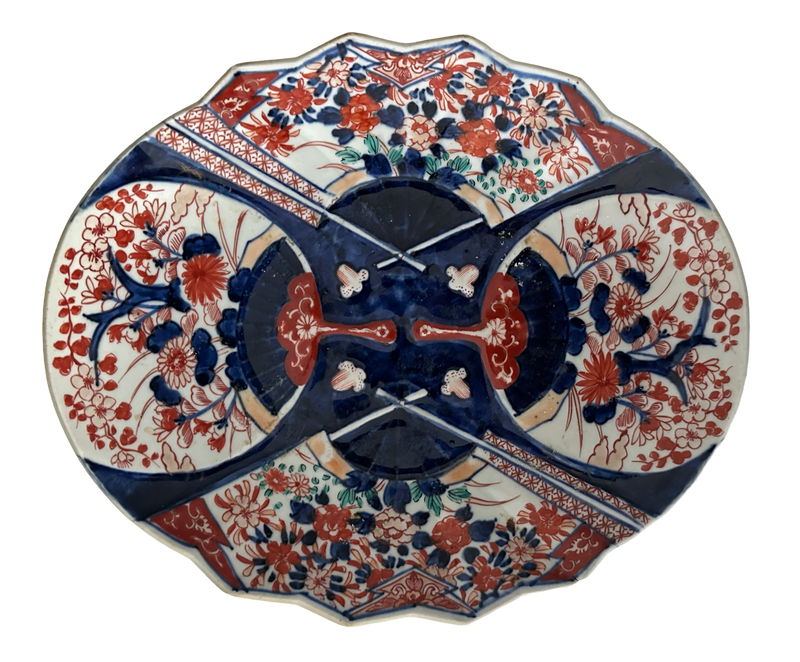
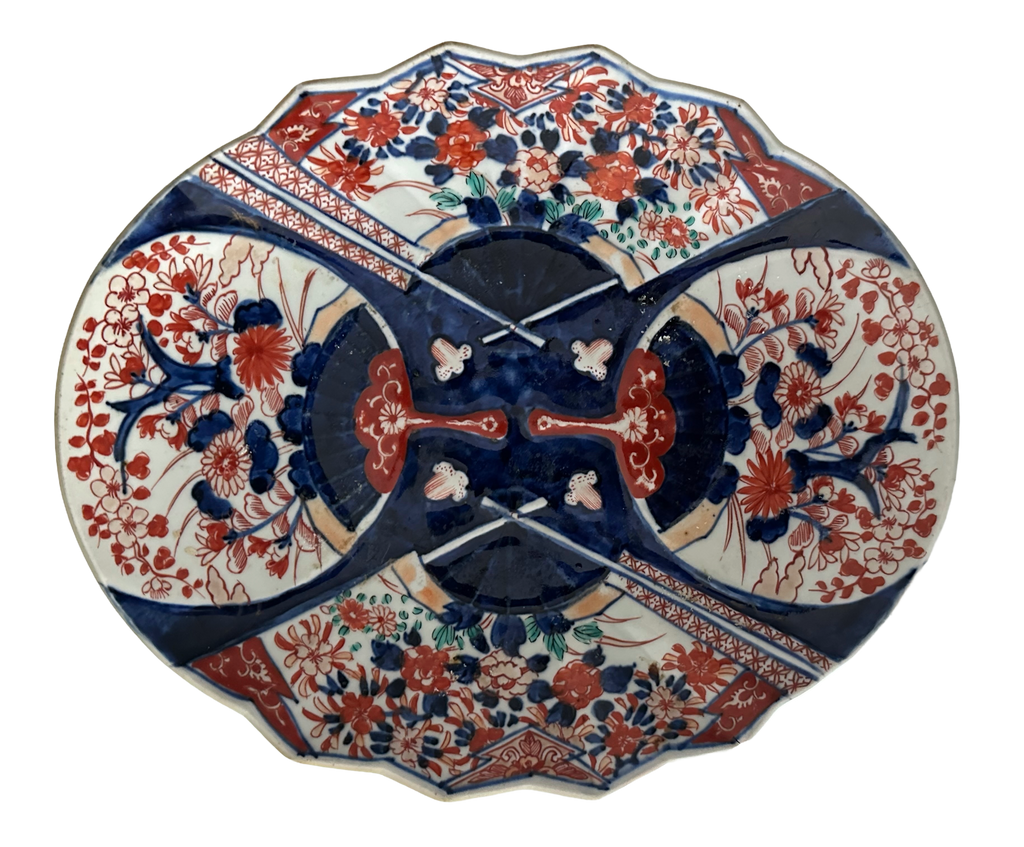
{"id":10945236205727,"title":"Antique Japanese Imari Porcelain Platter, Late Edo–Early Meiji, c.1850–1880","handle":"antique-japanese-imari-porcelain-platter-late-edo-early-meiji-c-1850-1880","description":"\u003cp\u003e\u003cmeta charset=\"UTF-8\"\u003e\u003c\/p\u003e\n\u003cp data-pm-slice=\"1 1 []\"\u003e\u003cspan\u003eThere is nothing restrained about this Imari platter. Its decoration is a wonderfully confident arrangement of opposing fan-shaped panels, intricate floral painting and deep cobalt blue, all held together by a striking geometric composition. At first glance, the design appears almost abstract; look closer, and the extraordinary detail begins to emerge.\u003c\/span\u003e\u003c\/p\u003e\n\u003cp\u003e\u003cspan\u003eThis is nineteenth-century Japanese porcelain at its most inventive. Rather than simply arranging flowers around a central medallion, the decorator has played with overlapping shapes, contrasting patterns and changes of scale. The effect recalls the richly patterned textiles and folding fans of traditional Japanese design, transforming a familiar porcelain form into something remarkably dynamic.\u003c\/span\u003e\u003c\/p\u003e\n\u003cp\u003e\u003cspan\u003eThe craftsmanship extends to the reverse, where freely brushed cobalt-blue motifs surround the foot, accompanied by fine concentric rings. Even the underside received the attention of the decorator.\u003c\/span\u003e\u003c\/p\u003e\n\u003cp\u003e\u003cspan\u003eDating to the late Edo or early Meiji period, the platter belongs to a time when Japanese porcelain makers were continuing to develop the elaborate decorative traditions that had made Imari celebrated for generations.\u003c\/span\u003e\u003c\/p\u003e\n\u003cp\u003e\u003cspan\u003eWhat makes this piece particularly appealing is the strength of its design. The bold composition commands attention from a distance, while the delicate floral details reward closer examination. It is a platter equally suited to display as a work of decorative art.\u003c\/span\u003e\u003c\/p\u003e\n\u003cp\u003e\u003cstrong\u003e\u003cspan\u003eOrigin:\u003c\/span\u003e\u003c\/strong\u003e\u003cspan\u003e Japan, Arita\/Imari tradition\u003c\/span\u003e\u003cbr\u003e\u003cstrong\u003e\u003cspan\u003ePeriod:\u003c\/span\u003e\u003c\/strong\u003e\u003cspan\u003e Late Edo to early Meiji\u003c\/span\u003e\u003cbr\u003e\u003cstrong\u003e\u003cspan\u003eDate:\u003c\/span\u003e\u003c\/strong\u003e\u003cspan\u003e c.1850–1880 \u003c\/span\u003e\u003cbr\u003e\u003cstrong\u003e\u003cspan\u003eMaterial:\u003c\/span\u003e\u003c\/strong\u003e\u003cspan\u003e Porcelain\u003c\/span\u003e\u003cbr\u003e\u003cstrong\u003e\u003cspan\u003eDecoration:\u003c\/span\u003e\u003c\/strong\u003e\u003cspan\u003e Underglaze cobalt blue with iron-red and polychrome overglaze enamels\u003c\/span\u003e\u003cbr\u003e\u003cstrong\u003e\u003cspan\u003eForm:\u003c\/span\u003e\u003c\/strong\u003e\u003cspan\u003e Scalloped platter with fan-shaped decorative panels\u003c\/span\u003e\u003cbr\u003e\u003cstrong\u003e\u003cspan\u003eMarkings:\u003c\/span\u003e\u003c\/strong\u003e\u003cspan\u003e Unmarked base with hand-painted cobalt-blue motifs and concentric rings to the reverse\u003c\/span\u003e\u003cbr\u003e\u003cstrong\u003e\u003cspan\u003eDimensions:\u003c\/span\u003e\u003c\/strong\u003e\u003cspan\u003e 30 × 25 cm (11.8 × 9.8 inches)\u003c\/span\u003e\u003cbr\u003e\u003cstrong\u003e\u003cspan\u003eCondition:\u003c\/span\u003e\u003c\/strong\u003e\u003cspan\u003e \u003c\/span\u003e\u003cspan\u003e\u003cstrong\u003e\u003c\/strong\u003e\u003c\/span\u003e\u003cspan\u003eGood antique condition, with age-related surface wear and a small chip to the rim, visible in the photographs. Please examine all photographs carefully.\u003c\/span\u003e\u003c\/p\u003e\n\u003cp\u003e\u003cstrong\u003e\u003cspan\u003eCollector's Note\u003c\/span\u003e\u003c\/strong\u003e\u003c\/p\u003e\n\u003cp\u003e\u003cspan\u003eOne of the most fascinating aspects of Japanese Imari porcelain is its relationship with the decorative arts beyond ceramics.\u003c\/span\u003e\u003c\/p\u003e\n\u003cp\u003e\u003cspan\u003eThe elaborate style known as \u003c\/span\u003e\u003cem\u003e\u003cspan\u003ekinrande\u003c\/span\u003e\u003c\/em\u003e\u003cspan\u003e, or brocade Imari, takes its name from \u003c\/span\u003e\u003cem\u003e\u003cspan\u003ekinran\u003c\/span\u003e\u003c\/em\u003e\u003cspan\u003e, the luxurious woven textiles traditionally made with coloured silks and gold or silver threads. Their richly patterned surfaces inspired a distinctive approach to porcelain decoration, with contrasting colours, intricate geometric borders and ornamental panels arranged across the vessel.\u003c\/span\u003e\u003c\/p\u003e\n\u003cp\u003e\u003cspan\u003eThe result was a decorative language in which porcelain could possess something of the richness and complexity of an embroidered textile. It is a tradition that helps explain the remarkable visual energy of nineteenth-century Imari.\u003c\/span\u003e\u003c\/p\u003e\n\u003cp\u003e\u003cstrong\u003e\u003cspan\u003eWorldwide Shipping: \u003c\/span\u003e\u003c\/strong\u003eWe are always happy to ship worldwide. Your piece will be packed with great care and sent tracked.\u003c\/p\u003e","published_at":"2026-11-25T17:50:22+00:00","created_at":"2026-11-25T16:57:56+00:00","vendor":"Eclectic Design ","type":"","tags":["19th Century","Antique Japanese Porcelain","Arita Porcelain","cobalt blue","Decorative Platter","Early Meiji","Fan-Shaped Panels","Floral Decoration","imari","Imari Platter","Japanese Antiques","Late Edo","Polychrome Enamels","Porcelain Platter","Scalloped Platter"],"price":6900,"price_min":6900,"price_max":6900,"available":true,"price_varies":false,"compare_at_price":null,"compare_at_price_min":0,"compare_at_price_max":0,"compare_at_price_varies":false,"variants":[{"id":62913279131807,"title":"Default Title","option1":"Default Title","option2":null,"option3":null,"sku":null,"requires_shipping":true,"taxable":true,"featured_image":null,"available":true,"name":"Antique Japanese Imari Porcelain Platter, Late Edo–Early Meiji, c.1850–1880","public_title":null,"options":["Default Title"],"price":6900,"weight":2000,"compare_at_price":null,"inventory_quantity":1,"inventory_management":"shopify","inventory_policy":"deny","barcode":null,"requires_selling_plan":false,"selling_plan_allocations":[],"quantity_rule":{"min":1,"max":null,"increment":1}}],"images":["\/\/eclecticdesignlondon.com\/cdn\/shop\/files\/IMG_0304.png?v=1795627496","\/\/eclecticdesignlondon.com\/cdn\/shop\/files\/IMG_0304_dfde55d1-17a2-476a-8131-a70d13323b9c.jpg?v=1795627295","\/\/eclecticdesignlondon.com\/cdn\/shop\/files\/IMG_0305_c684bc51-35ef-4816-b08f-b2a52388e1d2.png?v=1795627887","\/\/eclecticdesignlondon.com\/cdn\/shop\/files\/IMG_0306.png?v=1795627653","\/\/eclecticdesignlondon.com\/cdn\/shop\/files\/IMG_0305.png?v=1795627544","\/\/eclecticdesignlondon.com\/cdn\/shop\/files\/IMG_0304-2.png?v=1795627344","\/\/eclecticdesignlondon.com\/cdn\/shop\/files\/IMG_0309.png?v=1795627602"],"featured_image":"\/\/eclecticdesignlondon.com\/cdn\/shop\/files\/IMG_0304.png?v=1795627496","options":["Title"],"media":[{"alt":"Antique Japanese Imari porcelain platter with scalloped rim and overlapping floral fan designs in cobalt blue, iron red and green.","id":54675790233759,"position":1,"preview_image":{"aspect_ratio":1.208,"height":3024,"width":3654,"src":"\/\/eclecticdesignlondon.com\/cdn\/shop\/files\/IMG_0304.png?v=1795627496"},"aspect_ratio":1.208,"height":3024,"media_type":"image","src":"\/\/eclecticdesignlondon.com\/cdn\/shop\/files\/IMG_0304.png?v=1795627496","width":3654},{"alt":"Close-up of the Imari platter’s centre, showing overlapping cobalt-blue fans, iron-red motifs and floral decoration.","id":54675787776159,"position":2,"preview_image":{"aspect_ratio":1.0,"height":1960,"width":1960,"src":"\/\/eclecticdesignlondon.com\/cdn\/shop\/files\/IMG_0304_dfde55d1-17a2-476a-8131-a70d13323b9c.jpg?v=1795627295"},"aspect_ratio":1.0,"height":1960,"media_type":"image","src":"\/\/eclecticdesignlondon.com\/cdn\/shop\/files\/IMG_0304_dfde55d1-17a2-476a-8131-a70d13323b9c.jpg?v=1795627295","width":1960},{"alt":"Detail of a floral fan panel on the Japanese Imari platter, with red blossoms, cobalt-blue branches and a patterned border.","id":54675807699103,"position":3,"preview_image":{"aspect_ratio":1.429,"height":1169,"width":1671,"src":"\/\/eclecticdesignlondon.com\/cdn\/shop\/files\/IMG_0305_c684bc51-35ef-4816-b08f-b2a52388e1d2.png?v=1795627887"},"aspect_ratio":1.429,"height":1169,"media_type":"image","src":"\/\/eclecticdesignlondon.com\/cdn\/shop\/files\/IMG_0305_c684bc51-35ef-4816-b08f-b2a52388e1d2.png?v=1795627887","width":1671},{"alt":"Upper section of the Imari porcelain platter, showing its scalloped rim and floral fan panels in red, blue and green.","id":54675792494751,"position":4,"preview_image":{"aspect_ratio":1.481,"height":1299,"width":1924,"src":"\/\/eclecticdesignlondon.com\/cdn\/shop\/files\/IMG_0306.png?v=1795627653"},"aspect_ratio":1.481,"height":1299,"media_type":"image","src":"\/\/eclecticdesignlondon.com\/cdn\/shop\/files\/IMG_0306.png?v=1795627653","width":1924},{"alt":"Close-up of red and cobalt-blue flowers within a fan-shaped panel on the antique Japanese Imari platter.","id":54675788660895,"position":5,"preview_image":{"aspect_ratio":1.428,"height":1082,"width":1545,"src":"\/\/eclecticdesignlondon.com\/cdn\/shop\/files\/IMG_0305.png?v=1795627544"},"aspect_ratio":1.428,"height":1082,"media_type":"image","src":"\/\/eclecticdesignlondon.com\/cdn\/shop\/files\/IMG_0305.png?v=1795627544","width":1545},{"alt":"Detail of the Imari platter’s scalloped edge above a floral fan panel with red flowers and green foliage.\n","id":54675790168223,"position":6,"preview_image":{"aspect_ratio":1.517,"height":1364,"width":2069,"src":"\/\/eclecticdesignlondon.com\/cdn\/shop\/files\/IMG_0304-2.png?v=1795627344"},"aspect_ratio":1.517,"height":1364,"media_type":"image","src":"\/\/eclecticdesignlondon.com\/cdn\/shop\/files\/IMG_0304-2.png?v=1795627344","width":2069},{"alt":"Underside of the Japanese Imari porcelain platter, showing a raised circular foot and cobalt-blue decorative motifs.","id":54675790200991,"position":7,"preview_image":{"aspect_ratio":1.173,"height":2738,"width":3211,"src":"\/\/eclecticdesignlondon.com\/cdn\/shop\/files\/IMG_0309.png?v=1795627602"},"aspect_ratio":1.173,"height":2738,"media_type":"image","src":"\/\/eclecticdesignlondon.com\/cdn\/shop\/files\/IMG_0309.png?v=1795627602","width":3211}],"requires_selling_plan":false,"selling_plan_groups":[],"content":"\u003cp\u003e\u003cmeta charset=\"UTF-8\"\u003e\u003c\/p\u003e\n\u003cp data-pm-slice=\"1 1 []\"\u003e\u003cspan\u003eThere is nothing restrained about this Imari platter. Its decoration is a wonderfully confident arrangement of opposing fan-shaped panels, intricate floral painting and deep cobalt blue, all held together by a striking geometric composition. At first glance, the design appears almost abstract; look closer, and the extraordinary detail begins to emerge.\u003c\/span\u003e\u003c\/p\u003e\n\u003cp\u003e\u003cspan\u003eThis is nineteenth-century Japanese porcelain at its most inventive. Rather than simply arranging flowers around a central medallion, the decorator has played with overlapping shapes, contrasting patterns and changes of scale. The effect recalls the richly patterned textiles and folding fans of traditional Japanese design, transforming a familiar porcelain form into something remarkably dynamic.\u003c\/span\u003e\u003c\/p\u003e\n\u003cp\u003e\u003cspan\u003eThe craftsmanship extends to the reverse, where freely brushed cobalt-blue motifs surround the foot, accompanied by fine concentric rings. Even the underside received the attention of the decorator.\u003c\/span\u003e\u003c\/p\u003e\n\u003cp\u003e\u003cspan\u003eDating to the late Edo or early Meiji period, the platter belongs to a time when Japanese porcelain makers were continuing to develop the elaborate decorative traditions that had made Imari celebrated for generations.\u003c\/span\u003e\u003c\/p\u003e\n\u003cp\u003e\u003cspan\u003eWhat makes this piece particularly appealing is the strength of its design. The bold composition commands attention from a distance, while the delicate floral details reward closer examination. It is a platter equally suited to display as a work of decorative art.\u003c\/span\u003e\u003c\/p\u003e\n\u003cp\u003e\u003cstrong\u003e\u003cspan\u003eOrigin:\u003c\/span\u003e\u003c\/strong\u003e\u003cspan\u003e Japan, Arita\/Imari tradition\u003c\/span\u003e\u003cbr\u003e\u003cstrong\u003e\u003cspan\u003ePeriod:\u003c\/span\u003e\u003c\/strong\u003e\u003cspan\u003e Late Edo to early Meiji\u003c\/span\u003e\u003cbr\u003e\u003cstrong\u003e\u003cspan\u003eDate:\u003c\/span\u003e\u003c\/strong\u003e\u003cspan\u003e c.1850–1880 \u003c\/span\u003e\u003cbr\u003e\u003cstrong\u003e\u003cspan\u003eMaterial:\u003c\/span\u003e\u003c\/strong\u003e\u003cspan\u003e Porcelain\u003c\/span\u003e\u003cbr\u003e\u003cstrong\u003e\u003cspan\u003eDecoration:\u003c\/span\u003e\u003c\/strong\u003e\u003cspan\u003e Underglaze cobalt blue with iron-red and polychrome overglaze enamels\u003c\/span\u003e\u003cbr\u003e\u003cstrong\u003e\u003cspan\u003eForm:\u003c\/span\u003e\u003c\/strong\u003e\u003cspan\u003e Scalloped platter with fan-shaped decorative panels\u003c\/span\u003e\u003cbr\u003e\u003cstrong\u003e\u003cspan\u003eMarkings:\u003c\/span\u003e\u003c\/strong\u003e\u003cspan\u003e Unmarked base with hand-painted cobalt-blue motifs and concentric rings to the reverse\u003c\/span\u003e\u003cbr\u003e\u003cstrong\u003e\u003cspan\u003eDimensions:\u003c\/span\u003e\u003c\/strong\u003e\u003cspan\u003e 30 × 25 cm (11.8 × 9.8 inches)\u003c\/span\u003e\u003cbr\u003e\u003cstrong\u003e\u003cspan\u003eCondition:\u003c\/span\u003e\u003c\/strong\u003e\u003cspan\u003e \u003c\/span\u003e\u003cspan\u003e\u003cstrong\u003e\u003c\/strong\u003e\u003c\/span\u003e\u003cspan\u003eGood antique condition, with age-related surface wear and a small chip to the rim, visible in the photographs. Please examine all photographs carefully.\u003c\/span\u003e\u003c\/p\u003e\n\u003cp\u003e\u003cstrong\u003e\u003cspan\u003eCollector's Note\u003c\/span\u003e\u003c\/strong\u003e\u003c\/p\u003e\n\u003cp\u003e\u003cspan\u003eOne of the most fascinating aspects of Japanese Imari porcelain is its relationship with the decorative arts beyond ceramics.\u003c\/span\u003e\u003c\/p\u003e\n\u003cp\u003e\u003cspan\u003eThe elaborate style known as \u003c\/span\u003e\u003cem\u003e\u003cspan\u003ekinrande\u003c\/span\u003e\u003c\/em\u003e\u003cspan\u003e, or brocade Imari, takes its name from \u003c\/span\u003e\u003cem\u003e\u003cspan\u003ekinran\u003c\/span\u003e\u003c\/em\u003e\u003cspan\u003e, the luxurious woven textiles traditionally made with coloured silks and gold or silver threads. Their richly patterned surfaces inspired a distinctive approach to porcelain decoration, with contrasting colours, intricate geometric borders and ornamental panels arranged across the vessel.\u003c\/span\u003e\u003c\/p\u003e\n\u003cp\u003e\u003cspan\u003eThe result was a decorative language in which porcelain could possess something of the richness and complexity of an embroidered textile. It is a tradition that helps explain the remarkable visual energy of nineteenth-century Imari.\u003c\/span\u003e\u003c\/p\u003e\n\u003cp\u003e\u003cstrong\u003e\u003cspan\u003eWorldwide Shipping: \u003c\/span\u003e\u003c\/strong\u003eWe are always happy to ship worldwide. Your piece will be packed with great care and sent tracked.\u003c\/p\u003e"}
Antique Japanese Imari porcelain platter with scalloped rim and overlapping floral fan designs in cobalt blue, iron red and green.

Antique Japanese Imari Porcelain Platter, Late Edo–Early Meiji, c.1850–1880

£69.00

There is nothing restrained about this Imari platter. Its decoration is a wonderfully confident arrangement of opposing fan-shaped panels, intricate floral painting and deep cobalt blue, all held together by a striking geometric composition. At first glance, the design appears almost abstract; look closer, and the extraordinary detail begins to...

More Info
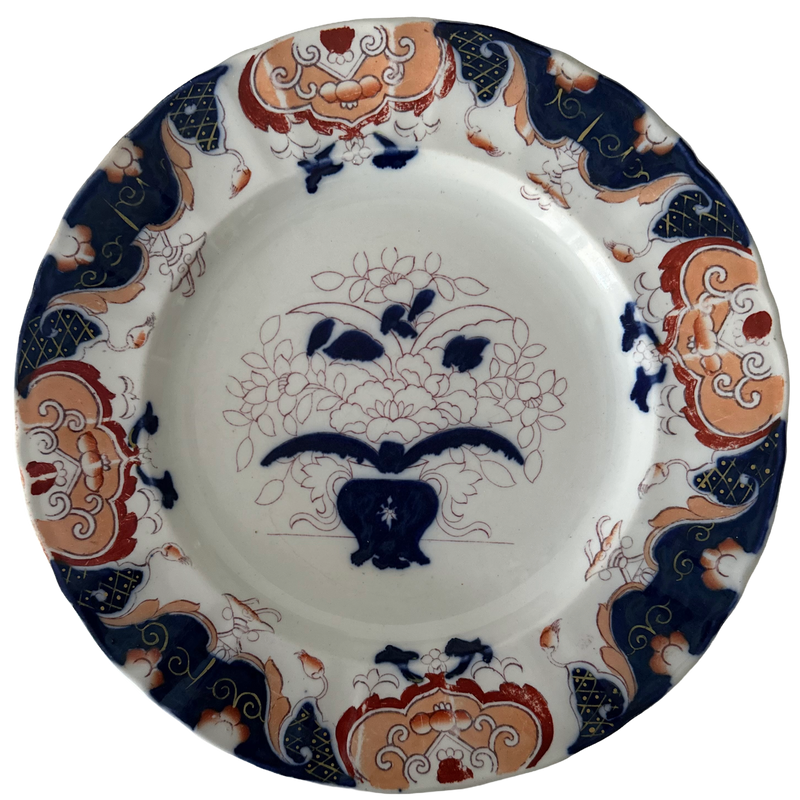
{"id":10945243152543,"title":"Antique Victorian Ashworth Imari-Style Ironstone China Plate, c.1862–1890","handle":"antique-victorian-ashworth-imari-style-ironstone-china-plate-c-1862-1890","description":"\u003cp\u003e\u003cmeta charset=\"UTF-8\"\u003e\u003c\/p\u003e\n\u003cp data-pm-slice=\"1 1 []\"\u003e\u003cspan\u003eTurn this plate over and its English origins are revealed. The exuberant Japanese-inspired decoration belongs to the world of Imari, but the impressed Ashworth mark places it firmly in Staffordshire, where the nineteenth-century appetite for Oriental design had inspired a flourishing ceramics industry.\u003c\/span\u003e\u003c\/p\u003e\n\u003cp\u003e\u003cspan\u003eThis is more than a fashionable imitation. G. L. Ashworth \u0026amp; Bros. inherited the original moulds, copper printing plates and patterns of Charles James Mason, whose innovative ironstone china had transformed English pottery earlier in the century. Ashworth continued that tradition, combining the durability of ironstone with the rich colours and elaborate decoration that made Mason's wares so popular.\u003c\/span\u003e\u003c\/p\u003e\n\u003cp\u003e\u003cspan\u003eThe plate captures that decorative ambition particularly well. The richly decorated cobalt-blue border, with its salmon-coloured scrolls and gilded details, surrounds a central vase of flowers. Here, much of the original hand-painted enamel and gilding has worn away, revealing the delicate printed outlines beneath. The surviving decoration offers an interesting glimpse into the techniques used to produce these elaborate Victorian patterns.\u003c\/span\u003e\u003c\/p\u003e\n\u003cp\u003e\u003cspan\u003eMade during the Victorian period, when Japanese and Chinese-inspired ceramics were firmly established in fashionable English interiors, it brings together two distinct traditions: the decorative brilliance of Imari and the technical ingenuity of Staffordshire pottery.\u003c\/span\u003e\u003c\/p\u003e\n\u003cp\u003e\u003cspan\u003eA piece that offers more than decorative appeal, it carries a tangible connection to the extraordinary exchange of ideas that shaped nineteenth-century English ceramics.\u003c\/span\u003e\u003c\/p\u003e\n\u003cp\u003e\u003cspan\u003e\u003c\/span\u003e\u003cstrong\u003e\u003cspan\u003eMaker:\u003c\/span\u003e\u003c\/strong\u003e\u003cspan\u003e G. L. Ashworth \u0026amp; Bros.\u003c\/span\u003e\u003cbr\u003e\u003cstrong\u003e\u003cspan\u003eDate:\u003c\/span\u003e\u003c\/strong\u003e\u003cspan\u003e c.1862–1890\u003c\/span\u003e\u003cbr\u003e\u003cstrong\u003e\u003cspan\u003eOrigin:\u003c\/span\u003e\u003c\/strong\u003e\u003cspan\u003e Hanley, Staffordshire, England\u003c\/span\u003e\u003cbr\u003e\u003cstrong\u003e\u003cspan\u003eMaterial:\u003c\/span\u003e\u003c\/strong\u003e\u003cspan\u003e Ironstone china\u003c\/span\u003e\u003cbr\u003e\u003cspan\u003e\u003cstrong\u003eDiameter:\u003c\/strong\u003e\u003c\/span\u003e\u003cspan\u003e 22.5 cm (8.9 inches)\u003c\/span\u003e\u003cbr\u003e\u003cstrong\u003e\u003cspan\u003eDecoration:\u003c\/span\u003e\u003c\/strong\u003e\u003cspan\u003e Imari-style cobalt blue with iron-red, salmon and gilt decoration\u003c\/span\u003e\u003cbr\u003e\u003cstrong\u003e\u003cspan\u003eMarkings:\u003c\/span\u003e\u003c\/strong\u003e\u003cspan\u003e Impressed ASHWORTH \/ REAL \/ IRONSTONE \/ CHINA, with additional hand-painted iron-red mark to the base\u003c\/span\u003e\u003cbr\u003e\u003cstrong\u003e\u003cspan\u003eCondition:\u003c\/span\u003e\u003c\/strong\u003e\u003cspan\u003e Good antique condition, with noticeable rubbing and loss of overglaze enamels and gilding, particularly to the central floral decoration, together with age-related surface wear. Please examine all photographs carefully.\u003cmeta charset=\"UTF-8\"\u003e\u003c\/span\u003e\u003cspan\u003e\u003c\/span\u003e\u003c\/p\u003e\n\u003cp\u003e\u003cstrong\u003e\u003cspan\u003eCollector's Note\u003c\/span\u003e\u003c\/strong\u003e\u003c\/p\u003e\n\u003cp\u003e\u003cspan\u003eThe story of Mason's Ironstone China began in 1813, when Charles James Mason patented a durable ceramic body intended to combine the strength of earthenware with the appearance of fashionable imported porcelain.\u003c\/span\u003e\u003c\/p\u003e\n\u003cp\u003e\u003cspan\u003eDespite its name, ironstone china was not porcelain, nor was it made principally from iron. It was a dense, hard-wearing ceramic that could withstand everyday use while carrying the elaborate decoration previously associated with more expensive wares.\u003c\/span\u003e\u003c\/p\u003e\n\u003cp\u003e\u003cspan\u003eThe name itself was a remarkable piece of nineteenth-century marketing. It suggested both the strength of iron and the refinement of fine china, helping to establish one of the most enduring identities in English pottery.\u003c\/span\u003e\u003c\/p\u003e\n\u003cp\u003e\u003cspan\u003eWhen the original Mason business declined, its designs and manufacturing equipment passed to Francis Morley and subsequently to Ashworth. This continuity explains why many Victorian Ashworth pieces retain such a strong connection to the celebrated Mason tradition.\u003c\/span\u003e\u003c\/p\u003e\n\u003cp\u003e \u003c\/p\u003e","published_at":"2026-11-25T20:15:34+00:00","created_at":"2026-11-25T19:00:55+00:00","vendor":"Eclectic Design ","type":"Decorative Plate","tags":["19th Century Ironstone","Antique Decorative Plate","Antique English Plate","Ashworth","Ashworth Ironstone","English Imari","Hand Enamelled Ceramics.","Imari Style","Ironstone China","Mason's Ironstone","Staffordshire pottery","Victorian Ceramics"],"price":2500,"price_min":2500,"price_max":2500,"available":true,"price_varies":false,"compare_at_price":null,"compare_at_price_min":0,"compare_at_price_max":0,"compare_at_price_varies":false,"variants":[{"id":62913299775647,"title":"Default Title","option1":"Default Title","option2":null,"option3":null,"sku":null,"requires_shipping":true,"taxable":true,"featured_image":null,"available":true,"name":"Antique Victorian Ashworth Imari-Style Ironstone China Plate, c.1862–1890","public_title":null,"options":["Default Title"],"price":2500,"weight":1000,"compare_at_price":null,"inventory_quantity":1,"inventory_management":"shopify","inventory_policy":"deny","barcode":null,"requires_selling_plan":false,"selling_plan_allocations":[],"quantity_rule":{"min":1,"max":null,"increment":1}}],"images":["\/\/eclecticdesignlondon.com\/cdn\/shop\/files\/IMG_0312.png?v=1795637157","\/\/eclecticdesignlondon.com\/cdn\/shop\/files\/IMG_0313.jpg?v=1795637237","\/\/eclecticdesignlondon.com\/cdn\/shop\/files\/IMG_0314.png?v=1795637054","\/\/eclecticdesignlondon.com\/cdn\/shop\/files\/IMG_0323.png?v=1795637197","\/\/eclecticdesignlondon.com\/cdn\/shop\/files\/IMG_0319.jpg?v=1795637069","\/\/eclecticdesignlondon.com\/cdn\/shop\/files\/IMG_0317.jpg?v=1795637084"],"featured_image":"\/\/eclecticdesignlondon.com\/cdn\/shop\/files\/IMG_0312.png?v=1795637157","options":["Title"],"media":[{"alt":"Victorian Ashworth Imari-style ironstone plate with a central flower-filled vase and cobalt blue, rust-red and peach border.","id":54676100350111,"position":1,"preview_image":{"aspect_ratio":1.0,"height":2894,"width":2894,"src":"\/\/eclecticdesignlondon.com\/cdn\/shop\/files\/IMG_0312.png?v=1795637157"},"aspect_ratio":1.0,"height":2894,"media_type":"image","src":"\/\/eclecticdesignlondon.com\/cdn\/shop\/files\/IMG_0312.png?v=1795637157","width":2894},{"alt":"Close-up of the Ashworth plate’s central floral design, with outlined flowers and cobalt blue foliage in a blue vase.","id":54676106477727,"position":2,"preview_image":{"aspect_ratio":1.0,"height":1782,"width":1782,"src":"\/\/eclecticdesignlondon.com\/cdn\/shop\/files\/IMG_0313.jpg?v=1795637237"},"aspect_ratio":1.0,"height":1782,"media_type":"image","src":"\/\/eclecticdesignlondon.com\/cdn\/shop\/files\/IMG_0313.jpg?v=1795637237","width":1782},{"alt":"Close-up of the Ashworth plate’s Imari-style border, showing cobalt blue panels, rust-red scrollwork and peach decoration.","id":54676100382879,"position":3,"preview_image":{"aspect_ratio":1.0,"height":1400,"width":1400,"src":"\/\/eclecticdesignlondon.com\/cdn\/shop\/files\/IMG_0314.png?v=1795637054"},"aspect_ratio":1.0,"height":1400,"media_type":"image","src":"\/\/eclecticdesignlondon.com\/cdn\/shop\/files\/IMG_0314.png?v=1795637054","width":1400},{"alt":"Reverse of the Victorian Ashworth ironstone plate, showing the raised foot ring, impressed maker’s mark and red painted marks.","id":54676100317343,"position":4,"preview_image":{"aspect_ratio":0.999,"height":2613,"width":2611,"src":"\/\/eclecticdesignlondon.com\/cdn\/shop\/files\/IMG_0323.png?v=1795637197"},"aspect_ratio":0.999,"height":2613,"media_type":"image","src":"\/\/eclecticdesignlondon.com\/cdn\/shop\/files\/IMG_0323.png?v=1795637197","width":2611},{"alt":"Close-up of the impressed maker’s mark on the underside of the Ashworth ironstone plate.","id":54676100448415,"position":5,"preview_image":{"aspect_ratio":1.333,"height":3024,"width":4032,"src":"\/\/eclecticdesignlondon.com\/cdn\/shop\/files\/IMG_0319.jpg?v=1795637069"},"aspect_ratio":1.333,"height":3024,"media_type":"image","src":"\/\/eclecticdesignlondon.com\/cdn\/shop\/files\/IMG_0319.jpg?v=1795637069","width":4032},{"alt":"Close-up of the red hand-painted pattern marks on the underside of the Ashworth ironstone plate.","id":54676101038239,"position":6,"preview_image":{"aspect_ratio":0.75,"height":4032,"width":3024,"src":"\/\/eclecticdesignlondon.com\/cdn\/shop\/files\/IMG_0317.jpg?v=1795637084"},"aspect_ratio":0.75,"height":4032,"media_type":"image","src":"\/\/eclecticdesignlondon.com\/cdn\/shop\/files\/IMG_0317.jpg?v=1795637084","width":3024}],"requires_selling_plan":false,"selling_plan_groups":[],"content":"\u003cp\u003e\u003cmeta charset=\"UTF-8\"\u003e\u003c\/p\u003e\n\u003cp data-pm-slice=\"1 1 []\"\u003e\u003cspan\u003eTurn this plate over and its English origins are revealed. The exuberant Japanese-inspired decoration belongs to the world of Imari, but the impressed Ashworth mark places it firmly in Staffordshire, where the nineteenth-century appetite for Oriental design had inspired a flourishing ceramics industry.\u003c\/span\u003e\u003c\/p\u003e\n\u003cp\u003e\u003cspan\u003eThis is more than a fashionable imitation. G. L. Ashworth \u0026amp; Bros. inherited the original moulds, copper printing plates and patterns of Charles James Mason, whose innovative ironstone china had transformed English pottery earlier in the century. Ashworth continued that tradition, combining the durability of ironstone with the rich colours and elaborate decoration that made Mason's wares so popular.\u003c\/span\u003e\u003c\/p\u003e\n\u003cp\u003e\u003cspan\u003eThe plate captures that decorative ambition particularly well. The richly decorated cobalt-blue border, with its salmon-coloured scrolls and gilded details, surrounds a central vase of flowers. Here, much of the original hand-painted enamel and gilding has worn away, revealing the delicate printed outlines beneath. The surviving decoration offers an interesting glimpse into the techniques used to produce these elaborate Victorian patterns.\u003c\/span\u003e\u003c\/p\u003e\n\u003cp\u003e\u003cspan\u003eMade during the Victorian period, when Japanese and Chinese-inspired ceramics were firmly established in fashionable English interiors, it brings together two distinct traditions: the decorative brilliance of Imari and the technical ingenuity of Staffordshire pottery.\u003c\/span\u003e\u003c\/p\u003e\n\u003cp\u003e\u003cspan\u003eA piece that offers more than decorative appeal, it carries a tangible connection to the extraordinary exchange of ideas that shaped nineteenth-century English ceramics.\u003c\/span\u003e\u003c\/p\u003e\n\u003cp\u003e\u003cspan\u003e\u003c\/span\u003e\u003cstrong\u003e\u003cspan\u003eMaker:\u003c\/span\u003e\u003c\/strong\u003e\u003cspan\u003e G. L. Ashworth \u0026amp; Bros.\u003c\/span\u003e\u003cbr\u003e\u003cstrong\u003e\u003cspan\u003eDate:\u003c\/span\u003e\u003c\/strong\u003e\u003cspan\u003e c.1862–1890\u003c\/span\u003e\u003cbr\u003e\u003cstrong\u003e\u003cspan\u003eOrigin:\u003c\/span\u003e\u003c\/strong\u003e\u003cspan\u003e Hanley, Staffordshire, England\u003c\/span\u003e\u003cbr\u003e\u003cstrong\u003e\u003cspan\u003eMaterial:\u003c\/span\u003e\u003c\/strong\u003e\u003cspan\u003e Ironstone china\u003c\/span\u003e\u003cbr\u003e\u003cspan\u003e\u003cstrong\u003eDiameter:\u003c\/strong\u003e\u003c\/span\u003e\u003cspan\u003e 22.5 cm (8.9 inches)\u003c\/span\u003e\u003cbr\u003e\u003cstrong\u003e\u003cspan\u003eDecoration:\u003c\/span\u003e\u003c\/strong\u003e\u003cspan\u003e Imari-style cobalt blue with iron-red, salmon and gilt decoration\u003c\/span\u003e\u003cbr\u003e\u003cstrong\u003e\u003cspan\u003eMarkings:\u003c\/span\u003e\u003c\/strong\u003e\u003cspan\u003e Impressed ASHWORTH \/ REAL \/ IRONSTONE \/ CHINA, with additional hand-painted iron-red mark to the base\u003c\/span\u003e\u003cbr\u003e\u003cstrong\u003e\u003cspan\u003eCondition:\u003c\/span\u003e\u003c\/strong\u003e\u003cspan\u003e Good antique condition, with noticeable rubbing and loss of overglaze enamels and gilding, particularly to the central floral decoration, together with age-related surface wear. Please examine all photographs carefully.\u003cmeta charset=\"UTF-8\"\u003e\u003c\/span\u003e\u003cspan\u003e\u003c\/span\u003e\u003c\/p\u003e\n\u003cp\u003e\u003cstrong\u003e\u003cspan\u003eCollector's Note\u003c\/span\u003e\u003c\/strong\u003e\u003c\/p\u003e\n\u003cp\u003e\u003cspan\u003eThe story of Mason's Ironstone China began in 1813, when Charles James Mason patented a durable ceramic body intended to combine the strength of earthenware with the appearance of fashionable imported porcelain.\u003c\/span\u003e\u003c\/p\u003e\n\u003cp\u003e\u003cspan\u003eDespite its name, ironstone china was not porcelain, nor was it made principally from iron. It was a dense, hard-wearing ceramic that could withstand everyday use while carrying the elaborate decoration previously associated with more expensive wares.\u003c\/span\u003e\u003c\/p\u003e\n\u003cp\u003e\u003cspan\u003eThe name itself was a remarkable piece of nineteenth-century marketing. It suggested both the strength of iron and the refinement of fine china, helping to establish one of the most enduring identities in English pottery.\u003c\/span\u003e\u003c\/p\u003e\n\u003cp\u003e\u003cspan\u003eWhen the original Mason business declined, its designs and manufacturing equipment passed to Francis Morley and subsequently to Ashworth. This continuity explains why many Victorian Ashworth pieces retain such a strong connection to the celebrated Mason tradition.\u003c\/span\u003e\u003c\/p\u003e\n\u003cp\u003e \u003c\/p\u003e"}
Victorian Ashworth Imari-style ironstone plate with a central flower-filled vase and cobalt blue, rust-red and peach border.

Antique Victorian Ashworth Imari-Style Ironstone China Plate, c.1862–1890

£25.00

Turn this plate over and its English origins are revealed. The exuberant Japanese-inspired decoration belongs to the world of Imari, but the impressed Ashworth mark places it firmly in Staffordshire, where the nineteenth-century appetite for Oriental design had inspired a flourishing ceramics industry. This is more than a fashionable imitation....


More Info